
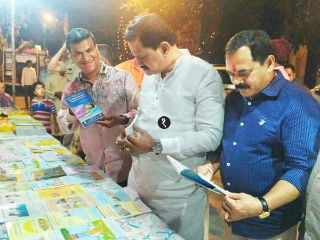
Dignitaries in and around Mumbai visit Sanatan Sanstha’s exhibition of Holy texts
On the occasion of Datta Jayanti many dignitaries in and around Mumbai paid a visit to Sanatan’s exhibition of Holy texts.
On the occasion of Datta Jayanti many dignitaries in and around Mumbai paid a visit to Sanatan’s exhibition of Holy texts.
Medicines will be in short supply during coming adverse times. Therefore, medicinal herbs / plants need to be sown right away.We need to learn the technique of preparing and using these home remedies. Therefore, it is essential that medicinal herbs be sown right away.
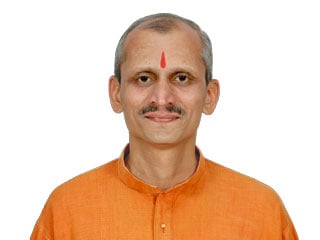
Our soul is a fraction of God. The mind works to unite our jiva (Embodied soul) with our soul. Since the mind can assist us in uniting the jiva with Shiv, it is important.
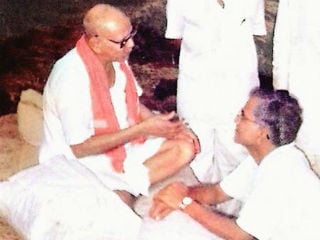
H.H. Kane Maharaj of Narayangaon (Pune District) was going to grace the spiritual workshop being conducted by Paratpar Guru (Dr.) Athavale at Balmohan School in Dadar Mumbai on 26.1.1992, with His auspicious presence.
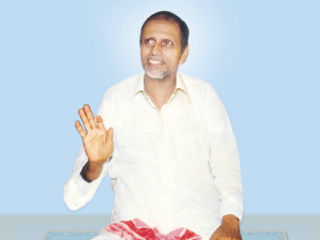
The most revered Saint Shri Kane Maharaj (popularly known as the Holy man distributing candy) left for heavenly abode at 5 a.m. on 22.10.2017.
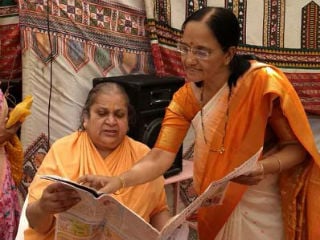
May the awareness created by Sanatan Sanstha be generated in all. May all Hindus unite in the facets of society, Dharma and Spirituality through this mission, was the blessing given by H.H. Swamini Mangalananda.
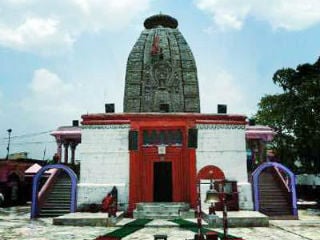
The Sun temple at Aurangabad in the Bharatiya state of Bihar is unique. It is believed that Vishwakarma (architect of the Deities) had constructed it overnight. The main door of the temple is in the west.
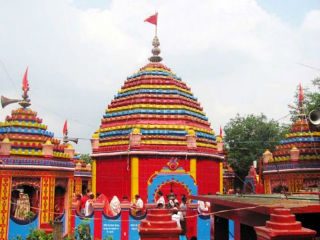
The world famous temple of Devi Shri Chhinnamastika is situated in the Ramgadh district, 80 kilometers away from Ranchi. This is one of the ancient temples of India and is situated on the confluence of rivers Bhairavi and Damodar.
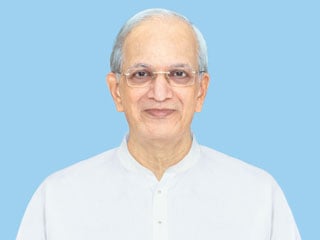
Sanatan Sanstha has been providing guidance to Hindus through satsangs (spiritual meetings) and turning them towards spiritual practice.
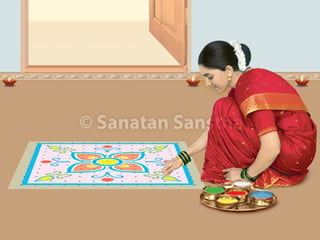
Rangoli is an art which precedes sculpture and painting. It is both an auspicious and a preliminary necessity in any religious ritual. It is a practice to draw Rangoli at the site of any auspicious religious ritual such as a holy festival, a religious festival, an auspicious function, ritualistic worship, a vowed religious observance, etc..