

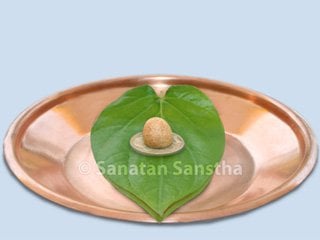
Ritual of offering dakshina (Offering in cash or kind)
By offering dakshina, a virtue of sacrifice develops in the individual. From sacrifice, detachment develops and this in turn gives rise to vairagya (Ascetic-like detachment).
By offering dakshina, a virtue of sacrifice develops in the individual. From sacrifice, detachment develops and this in turn gives rise to vairagya (Ascetic-like detachment).
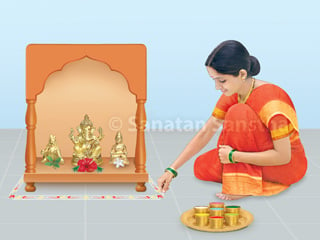
Drawing a rangoli in a sattvik pattern around a wooden platform or altar before commencing any puja (Ritualistic worship) helps to form a protective sheath, of rapidly moving waves emanating from that pattern, around wooden platform or altar.
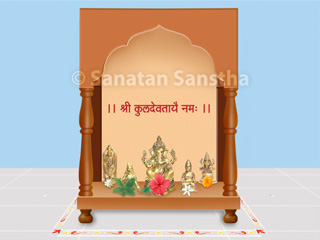
Read about the qualities to be learnt from the substances used in Puja (Ritualistic worship)
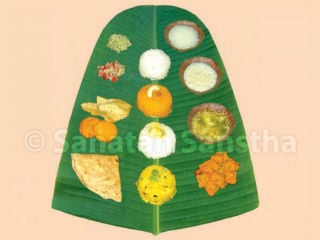
When offering Naivedya, first pray to the Ishtadevata (Benevolent Deity) and draw a mandal on the floor in front of the Deity.
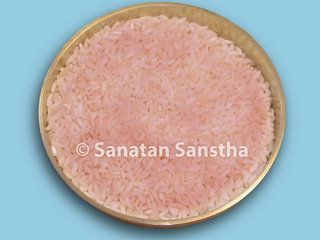
Akshata has the ability to attract frequencies of 5 Deities, to activate them, make them functional and to transmit them with the help of Earth and Water elements.

Read information about how the substances should be arranged in the ritualistic platter and spiritual importance of the components like turmeric, sindur, Akshata, camphor etc used in ritualistic worship.

Know about why should a conch be blown prior to ritualistic worship and Arti. Also understand the method of blowing a conch and its effect on negative energies …
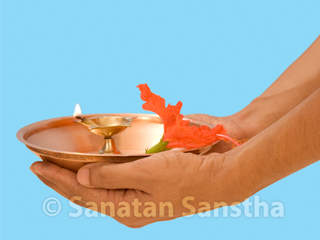
Arati should be sung with bhav (spiritual emotion). Pronunciation of words correctly and singing arati after understanding its meaning prove to be helpful in singing arati with bhav
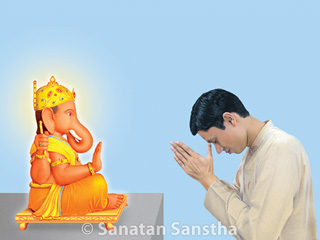
Prayer is actually a synonym for surrender. This act of surrender is completed only after the expression of gratitude. Gratitude is a means of offering the doership of an act to God / the Guru; hence it helps in reducing the ego.
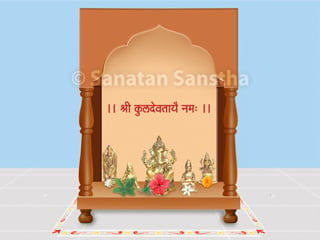
The temple at home is made with the intention that the worshipper gets maximum Chaitanya from the worship of the Deities.