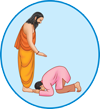

Importance of Adhik Maas
(Purushottam Maas)
Vrats and meritorious deeds to be performed during Adhik Maas and the underlying science
Adhik Maas happens to be the thirteenth month of a lunar year, occurring every two or three years. It is named after the month that follows it — the adhik maas preceding a month is termed ‘(Month name) Adhik Maas’, and the month following it is termed ‘Nij (Month name)’. Adhik Maas is regarded as a great parva (auspicious period) during which special religious rituals and meritorious deeds are observed.
Why Additional Vrats Are Performed in Adhik Maas
The sun transits through a zodiac sign every month; however, during Adhik Maas the sun does not transit through any zodiac sign — effectively meaning there is no Surya Sankranti in Adhik Maas. As a result, the speed of moon and sun varies and the environment develops changes as per the eclipse.
So that this harmful, changing environment does not affect our health, the makers of the scriptures have advised performing vrats and meritorious deeds during this month.
“Chanting continuously in Purushottam Maas results in the grace of Shri Purushottam Krishna.”
— Hindu Dharma ScripturesWhat to Practise During Adhik Maas
During Adhik Maas, fast for the entire month as devotion towards Shri Purushottam. One may observe:
- Ayachit Bhojan — Going for a meal to someone’s place at the eleventh hour (without invitation)
- Nakta Bhojan — Fasting during the day and having a single meal in the first prahar of the night (approximately 6 PM – 9 PM)
- Ekabhukta — Having only one meal during the entire day
Weak individuals should perform any one of the above vrats for at least three days, or one day at least.
Have only one meal a day. Do not talk during meals — it enhances the Power of the Soul. Having meals in a state of Moun (silence) results in the elimination of demerit.
Bathe in Holy water at a pilgrimage centre. Bathing just once in the Holy River Ganga eliminates all demerits.
Scriptures advise donating every day during the entire month. If not possible, donate on the following tithis:
- Dwadashi of Shukla and Krushna Paksha
- Pournima (Full Moon)
- Ashtami, Navami, and Chaturdashi of Krushna Paksha
- Amavasya (New Moon)
Perform Puja as well as chant the Name of Shri Purushottam Krishna every day. Make efforts to remain in communion with God continuously.
Perform Deepadan. If an oil lamp is lit in front of the Deity in the temple or at home, one earns wealth.
Go on pilgrimage. Have Darshan of Deities.
Donate Tambul (betel leaf and monetary offering). Donating Tambul for the entire month helps earn Saubhagya (marital status and auspiciousness).
Worship and feed the cow — a spiritually significant act of service in Hindu Dharma.
Perform Apupadan — the donation of Anarase (a fried sweet made by processing rice grains).
Donate Food to Sanatan’s Ashrams
Contribute to the mission of spreading Dharma during Adhik Maas and gain spiritual benefit. Anna daan (food donation) is regarded as one of the highest forms of charity in Hindu Dharma.
Which Karmas May Be Performed in Adhik Maas
Perform daily and occasional karmas. Perform those that cannot be avoided. The following are permissible:
Karmas performed with expectation of a specific fruit, such as Jwarashanti, Parjanyeshti, etc.
If for some reason — such as rebuilding of the temple — the murti of the Deity has been shifted, then reinstating the Deity can be done in this month.
Rituals such as Grahanshraddha, Jatkarma, Namakarma, etc., or Sanskars such as Annaprashan, may be performed.
Perform Shraddha-related rituals such as Manvadi and Yugadi. Tirthashraddha, Darshashraddha, and Nityashraddha may also be performed.
Tasks Not to Be Performed During Adhik Maas
Other than routine work, no new task should be commenced or concluded during Purushottam Maas. The following are not to be performed:
Do not perform: Apurva Devdarshan (first-ever visit to a Deity), commencing construction of a house, Vastushanti, taking Sanyas, Nutanvrata Grahan Diksha, marriage ceremony, thread ceremony (Upanayana), Choul (first haircut of a newborn child), Pratishthapana of a Deity, Mahadaan (and extremely large donation) and similar auspicious new beginnings.
What to Do If a Birthday Falls in Adhik Maas
If the month of a child’s birth happens to have a Purushottam Maas for a particular year, celebrate the birthday in the Nij Mas — not in the Adhik Maas.
A child born in the month of Jyestha in 2025: since there is a Purushottam Maas for the month of Jyestha in 2026, celebrate the birthday in the Nij Jyestha Maas on the same tithi — not in the Purushottam Maas. A child born in Adhik Jyestha Maas should celebrate their birthday on the same tithi in Jyestha Maas every year.
When Should Shraddha Be Performed During Adhik Maas
If an individual passed away in the month of Jyestha, Shake 1947 (last year), then his first yearly Shraddha should be performed in the Adhik Jyestha maas of Shake 1948 (this year). This is because 12 months will have elapsed in the Adhik Jyestha maas.
If the individual passed away long ago, his yearly Shraddha for the month of Jyestha should be performed in Nij Jyestha month. However, if the individual died in Adhik Jyestha Maas earlier, then his yearly Shraddha should be performed in the Adhik Jyestha Maas.
The first yearly Shraddha of those who passed away last year (Shake 1947) in the months of Ashadh, Shravan, etc. should be performed on the respective tithi of the respective months. They should not perform it a month earlier because of thirteen months in the year due to the Adhik Maas.
If someone dies this year in Adhik Jyestha or Nij Jyestha Maas, their first annual Shraddha should be performed on the respective tithi of the month of Jyestha the next year.
Ref.: Dharmasindhu – Malamaas Nirnay, Varjavarja Karme Vibhag · Ref.: Date Panchang
What Is Adhik Maas?
The period from one Amavasya (New Moon) to the next is termed Chandramas. All rituals prescribed in Hindu Dharma — religious festivals, vrats, havans, marriage ceremonies — follow the Chandramas. The Chandramas are named after the prominent star on the Pournima (Full Moon) of that month. For example, on the Pournima of Chaitra, the prominent star is Chitra.
The 12-month period from the lunar month of Chaitra to Phalgun is termed Chandravarsha. There are approximately 354 days in a Chandravarsha; one with an Adhik Maas has 384 days.
The period from one Surya Sankranti to the next is termed Sauramas, made up of 30 or 31 days.
Sauravarsha is the period when the sun commences its journey from Ashwini Nakshatra and returns to the same spot — approximately 365 days.
Chandravarsha is 354 days while Sauravarsha is 365 days — a difference of 11 days every year. To compensate for this gap and align the two calendars, an Adhik Maas is introduced after approximately 32.5 Chandramas — in other words, every 27 to 35 Chandramas.
Other Names of Adhik Maas
Adhik Maas is also termed Malamaas or Dhondyacha Mahina (in Marathi). Since special vrats and meritorious rituals are performed in this month instead of sacred ceremonies, it is also called Purushottam Maas.
Which Month Does Adhik Maas Precede?
Adhik Maas appears as an additional month preceding one of the seven lunar months from Chaitra to Ashwin. The month after it will be called Nij Chaitra, Nij Vaishakha, and so on.
On rare occasions, Adhik Maas can precede the lunar month of Phalgun as well.
Adhik Maas never precedes the months of Kartik, Margashirsha, Pousha, and Magha.
Kshay Maas (The Lost Month)
Just as there is an Adhik Maas (additional month), there can also be a Kshay Maas (lost lunar month). Of the three months — Kartik, Margashirsha, Pousha — any one can become a Kshay Maas. It is a rare occurrence, happening once in 140 or 190 years.
This is because around January 5, when the earth is near Perihelion, its speed of revolution is higher than normal. As a result, while passing the sun there could be two Suryasankrantis (appearance of sun in two rashis consecutively) during a single Chandramas. At such times the month is termed Kshay Maas.
The lunar month of Magha is never a Kshay Maas.
Method of Deciding the Adhik Maas
The month in which the Krushna Paksha Panchami will have Surya Sankranti will be the Adhik Maas the next year. This is, however, only a general rule.
If the remainder is less than 9, that year will have an Adhik Maas.
Remainder → Adhik Maas
30, 49, 68, 87, 106, 125 → Chaitra
11, 76, 95, 114, 133, 152 → Vaishakha
0, 8, 19, 27, 38, 46, 57, 65, 84, 103, 122, 141, 149 → Jyeshtha
16, 35, 54, 73, 92, 111, 130, 157 → Ashadha
5, 23, 46, 62, 70, 81, 82, 89, 100, 108, 119, 127, 138, 146 → Shravan
13, 32, 51 → Bhadrapad
2, 21, 40, 59, 78, 97, 135, 143, 145 → Ashwin
Any other remainder → No Adhik Maas that year.
Table of Purushottam Maas in the Near Future
| Common Era Year | Shalivahan Shak | Purushottam Maas |
|---|---|---|
| 2029 | 1951 | Chaitra |
| 2032 | 1953 | Bhadrapad |
| 2035 | 1956 | Ashadha |
| 2038 | 1959 | Jyeshtha |
| 2041 | 1961 | Ashwin |
| 2044 | 1964 | Shravan |
| 2047 | 1967 | Jyestha |
Smt. Prajakta Joshi, Jyotish Phalit Visharad (22.4.2026)
Adhik Maas comes once every three years. In this period great importance is given to Naam (chanting the Name of a Deity), Satsang, Satseva, Tyag (sacrifice), and Daan (donation). Those who give Daan in this period gain spiritual benefits to a great extent. Hence, people donate food (Anna), clothes (Vastra), and knowledge (Dnyan) during Adhik Maas, accumulating merits.
“If the food is offered with benevolence and to the one who deserves to be served food, the giver gets its appropriate fruit — he is emancipated from the sins committed by him and thus he reaches near God.”
— Hindu Dharma ScripturesSanatan Sanstha is committed to protecting the nation and creating awareness of Dharma. Sanatan’s ashrams and seva centres are located in various parts of the country, where the mission is of spreading Dharma. Hundreds of youth are rendering seva full time in these ashrams. Workshops, camps (Shibir), and events are held throughout the year, and donors have an opportunity to offer food to these volunteers who strive consistently to create awareness about Dharma.
Donate Food to Sanatan’s Ashrams
Contribute to the mission of spreading Dharma during Adhik Maas and gain spiritual benefit. Anna daan (food donation) is regarded as one of the highest forms of charity in Hindu Dharma.
 Ashadhi Ekadashi
 Ratha Saptami 2026
 Mahashivratri 2026
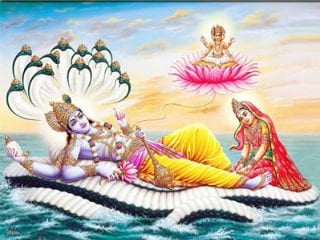 Vaikunth chaturdashi is an invaluable opportunity granted to us to worship Deity Shri Vishnu
 How to celebrate Navaratri in adverse times caused by coronavirus pandemic ?
नजीकच्या भविष्यात पुरुषोत्तम माससाठी टेबल
या मथळ्याखाली 1942 ते 1961 चे विवर दिले आहेत. हे ’नजीकच्या भविष्या” कसे ? हे भूतकालातील मास आहेत ना ?
नमस्कार वत्सला जी,
येथे ‘शालिवाहन शक’ याचा उल्लेख केलेला आहे. आता (पाश्चात्य कॅलेंडरनुसार २०२३) शालिवाहन शक १९४५ सुरु आहे.
आपली,
सनातन संस्था
Reading this article was enlightening. I never had this knowledge about Adhik Maas before, and now I feel more connected to our traditions.