

In the previous article on Natural Farming we read about Acharya Devvrat’s Gurukul’s farm turning barren due to overuse of chemicals. Here we learn of decision to shift the Gurukul’s farming practices from chemical dependency to natural farming for safer crops, better yield, and better soil quality.
Contents
- 10. Breaking the cycle: Choosing natural farming over costly chemicals
- 11. The first harvest: Proving natural methods work
- 12. Beyond chemicals: The natural farming revolution
- 13. Does chemical farming destroy beneficial life
- 14. Microbial gold: indigenous cow dung
- 15. The preparation: Create potent Jeevamrut
- 16. Microbial starter: Jeevamrut, a unique natural culture
10. Breaking the cycle: Choosing natural farming over costly chemicals
I (Acharya Devvrat) asked Dr. Hari Om for guidance, and he recommended a conventional agricultural approach: “Apply precise amounts of urea, DAP, phosphorus, zinc, and potash, along with green manure. If you do this consistently, your land will slowly regain its fertility over the next 20 to 30 years.”
A project spanning three decades! My 100 acres had already become barren. I replied, “Doctor, the land became infertile precisely because I used the very inputs you are recommending. You are asking me to repeat the mistake that caused this failure!” He remained skeptical and asked, “What other options do you have?” I told him, “I am going to apply the ‘Natural Farming’ methods I use on the rest of my property.” Unfamiliar with the concept, he questioned, “What could cow dung and gomutra (cow urine) possibly achieve?” I stood my ground, telling him, “I am determined to try. If it fails, I will return to your advice.”
11. The first harvest: Proving natural methods work
On 15 April 2017, the farmers returned my 100 acres of land, which had been rendered completely infertile. Two months later, on 15 June, I began the recovery process by applying five quintals of Ghan-Jeevamrut (a solid microbial culture) per acre before planting paddy. Throughout the growing season, I applied liquid Jeevamrut with every irrigation cycle and also used it as a foliar spray.
Within just two months, the crops began to thrive. By the time of harvest, the yield reached 26 to 28 quintals per acre. When I presented these results to Dr. Hari Om, he was stunned. “How is this possible?” he asked. “The soil had negligible organic carbon; it was effectively barren. How could it produce such a yield?”
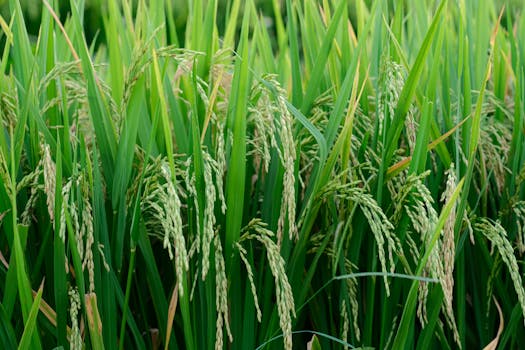
He departed, deeply sceptical of the results. However, I continued the same process the following year using both liquid Jeevamrut and Ghan-Jeevamrut. By the second harvest, the productivity of the land had increased further, yielding an average of 32 quintals of paddy per acre.
12. Beyond chemicals: The natural farming revolution
When the yield reached 32 quintals, Dr. Hari Om could hardly believe the results. “This is a miracle! It defies everything I have studied in agricultural science,” he admitted. “I must bring my team to re-examine your land.”
He proceeded to take hundreds of new soil samples and sent them to the university for rigorous analysis. When the laboratory report arrived, the team was even more shocked: in just one year, the organic carbon content in the soil had risen from 0.3% to 0.8%. They were adamant about the findings, stating, “In chemical farming, organic carbon cannot increase this dramatically in such a short time. No scientist in the world would accept that organic carbon levels could jump from 0.3% to 0.8% in just 12 months. This is truly astonishing!”
13. Does chemical farming destroy beneficial life
Agricultural chemists may struggle to accept this reality, but the process of increasing organic carbon is entirely dependent on soil bacteria, earthworms, and beneficial insects. These organisms are nature’s primary engineers, constantly working to build soil health. Chemical farming, however, systematically destroys these vital allies. If the very organisms responsible for soil vitality are killed off by synthetic inputs, how can we expect organic carbon levels to rise? By poisoning the soil ecosystem, conventional farming methods effectively ensure that the land remains trapped in a cycle of dependency.
14. Microbial gold: indigenous cow dung
To investigate this phenomenon, Dr. Hari Om enlisted the expertise of Dr. Baljeet Sarang, a senior professor of Microbiology at the Hissar Agricultural University in Haryana. Dr. Sarang, who had spent years collaborating with top researchers in the US, UK, and Germany, visited my Gurukul to conduct a formal study on Jeevamrut.
He collected and analysed soil samples from Desi (indigenous) cows, buffaloes, and foreign breeds such as Jersey and Holstein Friesian. His objective was to determine the microbial quality of each, comparing the biological density of these various sources.
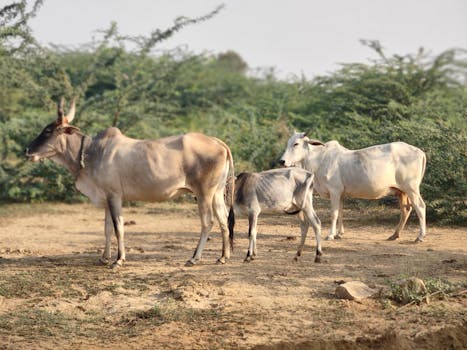
After months of intensive study, he discovered that a single gram of indigenous cow dung contains over 3 billion beneficial microbes. He found that the dung of all Indian cow breeds, including Sahiwal, Tharparkar, Rathi, Gir, Haryanvi, Lal Sindhi, Kankrej, and Ongole, possesses this same superior microbial quality. Conversely, the dung of buffaloes and foreign breeds, such as Jersey and Holstein Friesian, does not contain these microbes in significant quantities.
His research also confirmed that Desi cow urine is a natural storehouse of essential minerals. This data, which Palekar Guruji had also demonstrated through his own field experiments, has finally brought this scientific truth to the global agricultural community.
15. The preparation: Create potent Jeevamrut
To prepare enough Jeevamrut for one acre of land, start by selecting a 200-litre drum. Place it in a shaded area and fill it with approximately 180 litres of water. To this, add the following ingredients:
- 1.5 to 2 kg of Jaggery (provides energy for microbial growth)
- 1.5 to 2 kg of Pulse Flour (provides protein to strengthen microbes)
- A handful of soil (introduces native microorganisms)
- 10 kg of Desi cow dung
- 10 litres of Desi cow urine
Consider the scale of this process: if a single gram of Desi cow dung contains 3 billion microbes, imagine the sheer biological power contained in 10 kg! The pulse flour provides the essential proteins to build these microbial populations, while the jaggery acts as a high-energy fuel.
Once this mixture is prepared and eventually applied to the soil, these microbes come into contact with the existing soil population and begin to multiply rapidly, doubling in number every 20 minutes. Within 72 hours, their numbers become vast, creating a highly potent, living fertiliser tailored for one acre of land.
16. Microbial starter: Jeevamrut, a unique natural culture
There is no other fertiliser in the world that can be prepared in just 4–5 days with such efficacy. The daily output of dung and urine from a single Desi cow is sufficient to produce enough Jeevamrut to treat an entire acre of land.
When applied to the soil, Jeevamrut acts as a powerful “starter culture,” triggering the rapid growth of countless beneficial microbes. These organisms play a critical role in nutrient management: since the atmosphere is composed of 78% nitrogen, these microbes efficiently draw that nitrogen from the air and convert it into a form that plants can easily absorb as food. By effectively turning the soil into a living laboratory, Jeevamrut eliminates the need for synthetic fertilisers, working in harmony with nature’s own cycles.
 How to cultivate vital medicinal plants at home ? Part – 2
 How to cultivate vital medicinal plants at home ? Part – 1
 A seasonal guide to traditional home gardening
 Natural farming: The sustainable alternative (Part 4)
 Natural farming: The sustainable alternative (Part 3)
 Natural farming: The sustainable alternative (Part 1)