

Contents
- 1. The fundamentals of plant nutrition
- 2. The power of desi cow dung: Nature’s bio-factory
- 3. How Jeevamrut was born
- 4. Guide to Prepare Jeevamrut
- 5. Your daily dose guide for Jeevamrut
- 6. Bijamrut: Organic seed treatment
- 7. Understanding the science: How does Jeevamrut work?
- 8. The multi-layered advantage of Jeevamrut
- 9. Where to source the ingredients?
- 10. Alternatives for jaggery and gram flour
- 11. Join the movement: A call to action for every gardener
Padma Shri awardee Shri. Subhash Palekar developed the ‘Subhash Palekar Zero Budget Natural Farming’ (SBNF) technique. A central component of this farming technique is a substance called ‘Jeevamrut’. From preparation to application: here is everything you need to know about this natural wonder.

1. The fundamentals of plant nutrition
Plants absorb nutrients through their roots from the soil. However, for these nutrients to become available to the plant, certain microorganisms are essential. Nitrogen is vital for plant growth, while it is abundant in the air, plants cannot absorb it directly from the atmosphere. They must take it from the soil. Specific bacteria are required to convert nitrogen into a form that plants can use. Essentially, plant nutrition depends on the activity of these bacteria. The more active they are, the more nutrients the plant receives.
2. The power of desi cow dung: Nature’s bio-factory
The dung of the desi (indigenous) cow is a powerhouse of beneficial microbial life. It contains a unique and vast profile of bacteria essential for plant health.
On average, a single desi cow produces 10 kg of dung per day, which is the exact amount needed to produce 200 litres of Jeevamrut. When diluted at a 1:10 ratio with water, this volume can fertilise an entire acre (4,000 square meters) of farmland. Since a single monthly application is sufficient, the waste from just one desi cow can sustain 30 acres of land every month.
3. How Jeevamrut was born
Subhash Palekar recognised the value of Desi cow dung and and sought a way to exponentially increase its beneficial bacterial population. This led to the development of Jeevamrut. The concept is remarkably similar to making yoghurt. Just as a small amount of curd (starter culture) is added to milk to trigger the rapid multiplication of Lactobacillus, Jeevamrut serves as a potent starter culture for the soil. The bacteria present in the cow dung, urine, and soil multiply at a high rate when fed with jaggery (sugar) and pulse flour (protein).
4. Guide to Prepare Jeevamrut
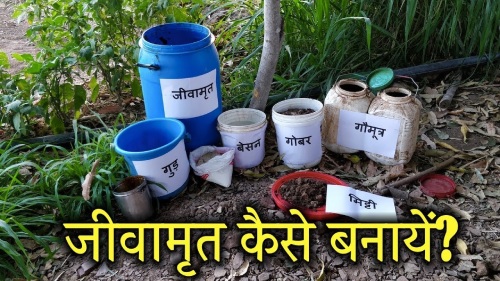
Whether you are tending to a large garden or growing vegetables on a balcony, you can easily product this nutrient-dense solution at home. Follow these steps to create a 10-litre batch:
The Base: Combine 0.5 to 1 kg of fresh desi cow dung with 0.5 to 1 litre of desi cow urine in 10 litres of water. Ensure the dung is fresh and moist; while the urine can be aged, avoid using Gomutra ark (concentrated extracts).
Add Nutrient Mix: Mix in a handful of soil, 100g of besan (gram or pulse flour), and 100g of organic jaggery.
The Activation: Use a wooden stick to stir the mixture in a clockwise direction for two minutes.
The Fermentation: Cover your container, preferably plastic or clay, as metal can react with the culture, with a jute bag or breathable cloth. Store the mixture in a shaded area.
The Routine: For the next three days, stir the mixture for two minutes every morning and evening. By the fourth day, your Jeevamrut is ready for use.
Preparing Small Quantities: If you only have a few indoor or balcony plants, you can scale the recipe down using a simple plastic mug: Mix 300ml water, 30g fresh cow dung, 30ml cow urine, 1 teaspoon besan, 1 teaspoon jaggery, and a pinch of soil. Stir clockwise for 30 seconds twice daily for three days. On the fourth day, dilute the concentrate with 10 parts water (approximately 3 mugs) and pour one cup at the roots of each plant.
5. Your daily dose guide for Jeevamrut
Jeevamrut is best used between the 4th and 7th day of preparation. Always dilute it with 10 parts water before use.
For Soil Health: To turn dry leaves and waste into fertile humus, sprinkle diluted Jeevamrut over the waste weekly.
Root Application: Give 1 cup to small plants and 1 mug to larger plants at the roots.
Foliar Spray: To prevent fungal growth, strain the diluted mixture through a cloth and spray it on the leaves. It is recommended to spray on Purnima (Full Moon) and Amavasya (New Moon).
Frequency: Apply at least once a month, though once every 15 days is ideal for better immunity and pest resistance.
6. Bijamrut: Organic seed treatment
instructions for preparing and using Bijamrut (a traditional organic seed treatment):
A. Ingredients for making half a litre of Bijamrut
(Required for cultivation on 1,000 square feet)
Water: Half a litre
Fresh Desi Cow Dung: 50 to 100 grams
Desi Cow Urine (Gomutra): 50 to 100 ml (approx. ½ to 1 cup)
Soil: A pinch (preferably from the bund of a field or virgin land)
Slaked Lime (Chuna): A pinch
B. Preparation & storage
Do not prepare Bijamrita in a metal container; use an earthen pot or a plastic container instead.
Keep the mixture covered with a burlap/gunny bag or a cotton cloth.
Stir the mixture with a stick in a clockwise direction every morning and evening. It will be ready to use after 24 hours.
Note: Do not dilute the Bijamrita used for seed treatment (Beej Sanskar).
C. Disposal of surplus mixture
If there is any leftover Bijamrita, dilute it with 10 parts water. Use this solution to water the roots of plants or garden beds.
Small plants: 1 cup per plant.
Large trees/plants: 1 liter per plant.
7. Understanding the science: How does Jeevamrut work?
Jeevamrut acts as a biological catalyst, teeming with beneficial bacteria that accelerate the decomposition of organic waste. Here is how it transforms your garden:
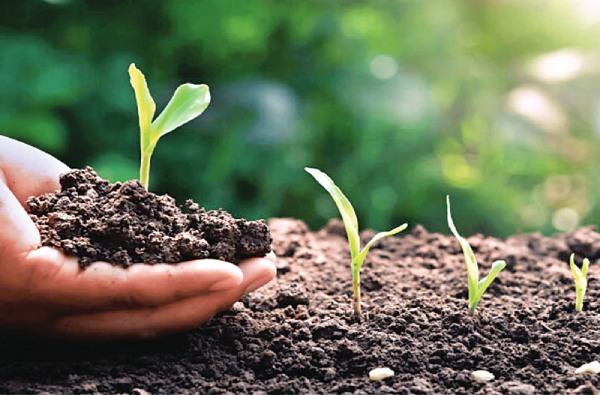
Humus production: Once applied, these microbes rapidly break down organic matter into humus, the richest form of soil nutrients.
Enhanced nutrition: This process provides plants with an abundant supply of bio-available minerals, leading to sturdier stems and noticeably larger leaves.
The photosynthesis boost: Larger, healthier leaves capture more sunlight, significantly improving the plant’s ability to perform photosynthesis.
Higher yields: With increased energy production, the plant can store more nutrients within its fruits and vegetables, resulting in a more bountiful and flavourful harvest.
8. The multi-layered advantage of Jeevamrut
Integrating Jeevamrut into your gardening or farming routine offers a range of benefits that go far beyond simple plant growth. Here is why this method is a game-changer:
Exceptional Cost-Efficiency: Because it uses readily available, natural ingredients, Jeevamrut is incredibly inexpensive to produce. It significantly reduces or even eliminates the need for costly chemical fertilisers.
Purity and Health: As a 100% natural solution, it is the foundation for growing toxin-free, nutrient-dense food, ensuring that what you harvest is as healthy as nature intended.
Superior Soil Structure: Regular application transforms the earth, making the soil more porous and crumbly. This physical change dramatically improves water-retention capacity, meaning your garden stays hydrated for longer.
A Thriving Ecosystem: Jeevamrut acts as an invitation for nature’s engineers, that is, earthworms and beneficial microbes. By fostering this friendly population, you create a self-sustaining underground ecosystem.
Climate Resilience: Plants fed with Jeevamrut develop a robust internal immunity. This strength allows them to withstand environmental stress, such as scorching heat waves or unexpectedly heavy rainfall.
9. Where to source the ingredients?
Finding the primary ingredients for Jeevamrut is simpler than you might expect.
Local Gaushalas (Cow Shelters): The most reliable sources for authentic desi cow dung and urine are local shelters. In major cities like Mumbai, Pune, or Bengaluru, these organisations are often well-established and happy to provide materials to home gardeners.
Ready-Made Solutions: If you are short on time, many shelters now produce and sell pre-mixed Jeevamrut. While this is a convenient way to start, brewing your own remains the most cost-effective and rewarding method.
Community Networking: Connecting with local organic farming groups or “terrace gardening” communities can often lead you to shared resources or bulk deliveries of fresh ingredients.
10. Alternatives for jaggery and gram flour
If you don’t have gram flour or jaggery on hand, you can easily substitute them with common household or garden items.
Gram flour (besan) alternatives: Any pulse flour will work perfectly. You can use moong, tur, or masur flour. A great way to save money is to grind down damaged or “insect-holed” pulses that are often discarded during kitchen cleaning.
Jaggery alternatives: The goal is to provide a sugar source for the bacteria. The pulp of sweet fruits like banana, papaya, chikoo, or mango is an excellent substitute. Overripe or bruised fruits that are no longer fit for eating are perfect for this.
Using sugarcane juice: Fresh sugarcane juice is a fantastic alternative to jaggery. If using juice, simply use four times the volume of the required jaggery to ensure the bacteria have enough energy to multiply.
11. Join the movement: A call to action for every gardener
We encourage practitioners to make Jeevamrut a cornerstone of their routine as part of the wider Home Gardening Campaign. By collaborating in groups to prepare larger batches, you can effectively share the labour and foster a sense of community spirit. Adopting this natural approach allows you to move beyond a reliance on expensive chemical fertilisers, ensuring your harvest is as pure as nature intended. It is our sincere vision that every household will soon flourish with its own supply of vibrant, home-grown vegetables, fresh fruits, and potent medicinal plants.
 How to cultivate vital medicinal plants at home ? Part – 2
 How to cultivate vital medicinal plants at home ? Part – 1
 A seasonal guide to traditional home gardening
 Natural farming: The sustainable alternative (Part 4)
 Natural farming: The sustainable alternative (Part 3)
 Natural farming: The sustainable alternative (Part 2)