

There are innumerable medicinal plants, so it is natural to wonder which ones should be cultivated at home. This article provides information on how to cultivate some of the important medicinal plants. Readers may also cultivate plants other than those mentioned in this article. In the previous article we have read about Tulsi, Adulsa, Giloy, Aloe vera, Kalmegh and Jasmine.
Contents
 |
||
| Shri. Madhav Paradkar | Vaidya Meghraj Paradkar | Dr Digambar Nabhu Mokat |
Click here to read Part 1
7. Nirgundi (Vitex negundo)
Importance
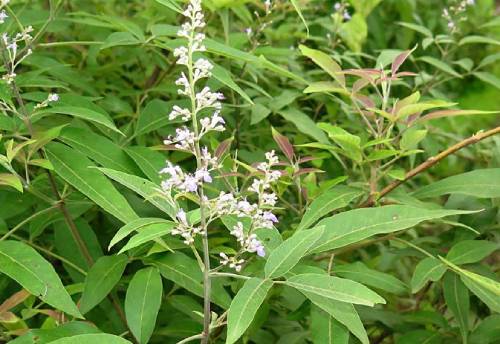
This is the infallible medicine for ailments related to vata (One of the three foundational mind-body energies, or doshas, composed of the elements air and space. All movements in the body are due to properties of vata). Leaves of Nirgundi are used for applying heat compresses to a body part for pain relief. 1 – 2 plants should be planted for a family of 4 members.
Identification
Nirgundi has trifoliate leaves like Bel (Aegle marmelos, also called as Bael or Apple wood) plant, but these are longer in length and have a distinct odor. Cattle do not eat these leaves. Therefore, Nirgundi is planted alongside the farm fences in most of the villages. These plants are hardly seen at the roadside. It bears blue coloured flowers.
Cultivation
Nirgundi can be propagated by planting its stems. This plant should be grown around the fence.
8. Drumsticks (Moringa oleifera)
Importance
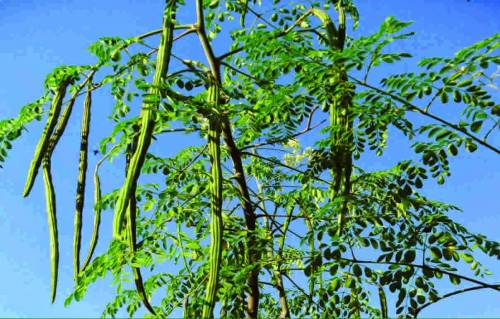
Moringa is a quite well-known tree. Leaves, flowers and pods of Moringa are used as ingredients in preparing vegetable side dish or dals as they are good for health. In times of emergency, it is best to have as many Moringa trees around us as possible to serve as they serve as a good source of food. Even the skin of the drumsticks is used in medicines. It has abundant minerals like calcium.
Cultivation
Moringa is cultivated using saplings prepared by planting its seeds. Before sowing, the seeds must be soaked overnight in lukewarm water and then sowed the next morning. By doing this, the seeds germinate well. If its cuttings (branches as thick as a stout stick) are planted at the onset of the monsoon, they sprout roots and develop into a small plant. If the cuttings are planted during the peak rainy season, then they rot. Therefore, if the cuttings are to be planted, then it should be done before the rainy season or after the monsoon ends. The planted cuttings sprout roots after about 15 days.
9. Lemongrass
Importance
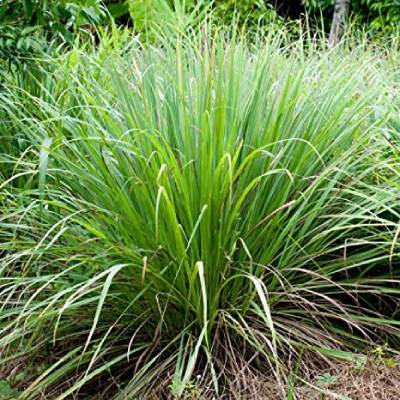
Consuming tea made from lemongrass (devoid of milk) rather than regular tea during rainy as well as winter season daily is good for health. It also helps reduce fever and cleanse the urinary tract. About 2 – 4 saplings of lemongrass should be planted for a family of 4 members.
Cultivation
Lemongrass grows in a bunch. Many people plant it. One can borrow a transplant from them and cultivate it. At the onset of the rainy season lemongrass bunches should be uprooted and the new sprouts growing from the base should be separated and planted individually. While planting the sprouts, the leaves up to about 6 -7 inches above the base should be cut. If the bunch of lemongrass is not uprooted and planted individually before the rainy season, then they may decay.
10. Durva (Cynodon dactylon commonly known as Bermuda grass)
Importance
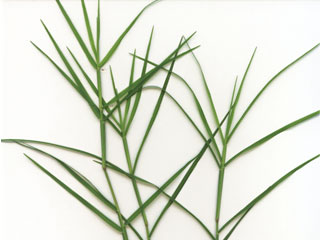
Durva grass possesses cooling, astringent and healing properties and therefore an important medicine for treating illnesses related to heat. Durva grass is said to prevent miscarriages. Durva grass is also useful in case one is suffering from nightmares. Grow Durva grass around the house as much as possible.
Cultivation
Durva grass grows automatically during the rainy season. These should be plucked and sowed in a place where it can receive water. Even if 2-4 saplings of Durva are planted, they grow abundantly. Post rainy season, they fade or wither if they are not watered.
11. Piper betle or Betel vine
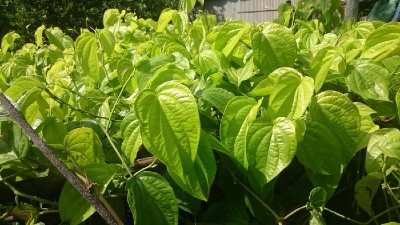
Importance
Eating a Betel leaf after a meal during rainy season helps in digestion. It is beneficial in case of ailments such as cough, phlegm and poor digestion. One betel vine is enough for a family of 4 members.
Cultivation
Branches of a bigger vine can be cut and planted. Most of the people have this vine. Saplings are also available in the nurseries. This vine needs a support to grow. Therefore, it should be planted at the base of the trees like Moringa, Pangara (Erythrina variegata commonly known as Tiger’s claw tree or Indian coral tree), Hadaga (Sesbania grandiflora commonly known as vegetable hummingbird, katurai, agati, agastya), Coconut, Areca catechu (commonly known as Indian nut palm, betel nut palm). Once the plant grows into a vine, it then grows abundantly.
12. Aaghada (Achyranthes aspera also known as chaff flower)
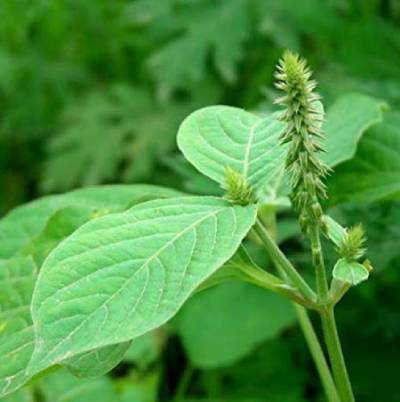
Importance
Aaghada is a well-known medicinal plant used for treating poisoning caused by rats, scorpions and dog bites, as well as for toothache. Kheer prepared with its seeds cooked in milk as said to reduce hunger, aiding weight loss programmes. According to elders, if the roots of this plant are tied around the waist or to the hair of a pregnant woman, pregnancy and childbirth become easier. After delivery, the tied roots should be removed immediately and immersed in flowing water, such as a river, after offering haldi-kumkum (Turmeric and vermilion powder). Otherwise, adverse effects may occur.
Identification
After the first rainfall, saplings of this plant grow naturally. At the end of the rainy season, the plant develops tufts. These tufts stick to clothes and contain seeds that resemble grains of rice.
Cultivation
This plant is essentially a weed and does not need to be cultivated. However, since it may be difficult to find when needed, at least 2 to 4 saplings should be grown around the house.
Compiler: Mr. Madhav Ramchandra Paradkar and Vaidya Meghraj Madhav Paradkar, Sanatan Ashram, Ramnathi, Goa.
Guide: Dr. Digambar Nabhu Mokat, Assistant Professor, Department of Botany (Botanical Sciences), Savitribai Phule Pune University, Pune and Principle Director, Regional Cum Facilitation Centers, Western Region (RCFC-WR), National Medicinal Plants Board (NMPB), Ministry of Ayush, Government of Bharat (India).
 How to cultivate vital medicinal plants at home ? Part – 1
 Collect and preserve the medicinal plants that grow naturally during the monsoon ! (Part 2)
 Uses of the rui (crown flower) plant in day-to-day living
 Sow medicinal herbs around your house to prepare for the coming adverse times