
Does Hindu Dharma have the concept of eternal damnation (punishment in hell)? Short answer is no. While the ultimate aim of human birth is to attain Moksha, most people are unaware of this, keep accruing punya and paap, and remain trapped in the never ending cycle of life and death. The misdeeds that accrue paap do not go unpunished. Several Dharmagranths outline the punishment for various degrees of misdeeds. The Shrimad Bhagavatam (Bhagavat Purana) details this as a dialogue between Shukadev Rishi and Maharaj Pareekshit.
1. Three types of deeds and their consequences
Shukadeva tells Maharaj Pareekshit:
“O king, in this world each human being’s actions arise under one of three modes of nature:
a. the mode of goodness (Sattva),
b. the mode of passion or desire (Rajas), and
c. the mode of ignorance (Tamas).
Accordingly, souls must undergo three kinds of results. Through good actions under the mode of goodness, one attains happiness in heavenly realms. Through wrongful actions motivated by ignorance, one falls into distress in hell-realms. But those who knowingly choose evil, despite knowing what is right and wrong, must suffer the severest punishments in the hells.”
2. Punishment faced by humans based on their sins
The Naraka is a region under the control of Yama, the Deity of Death. His messengers (Yama-doot) bring sinful souls after death; Yama then judges them and sends them to a hell-realm appropriate to their misdeeds. Many texts (such as the Bhagavata Purana) enumerate various such hell-realms, each tied to particular sins. Some are detailed below –
| Hell-realm | Sin | Description of punishment |
|---|---|---|
| Tamishra | He who steals another’s wife, child or money | Starved of food and drink; bound and beaten by Yama’s messengers. |
| Andha-tamishra | He who cheats another and then enjoys life with his wife and children | Tormented so grievously that he loses intellect and vision. |
| Raurava | He who toils all day and indulges in unjustified violence to support his household | The very animals he killed take revenge on him. |
| Maharaurava | He who lives by making others unhappy | Fierce creatures called kravyad-animals eat him alive. |
| Kumbhipaka | He who roasts birds and animals alive to fulfill his desire | Thrown into a cauldron of boiling oil. |
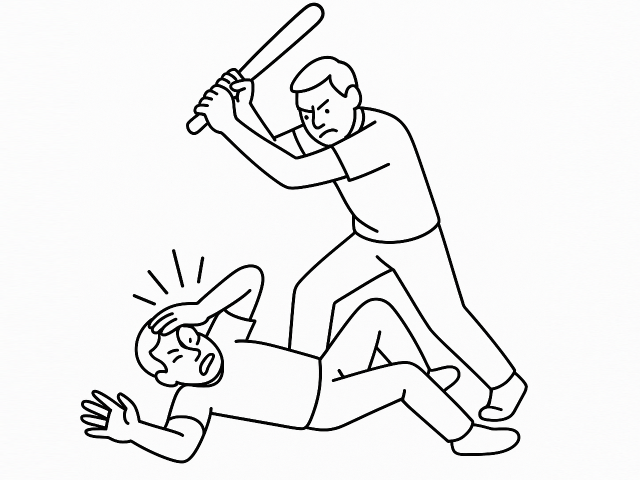
| Kalasutra | One who murders a Brahmin (a priest) | Burned in a copper cell: flame from below, scorching sunlight from above. |
| Asipatravana | He who drifts from the Vedic path | Flogged by Yama’s messengers until blood flows. |
| Sukaramukha | Kings or officials who punish innocent citizens | Crushed like sugarcane in a mill by Yama’s messengers. |
| Andhakupa | One who torments and kills other humans with malice | Carnivorous animals, serpents, birds, mosquitoes, and worms attack ceaselessly. |
| Krimibhojana | One who eats before serving elders, children, and guests | Inhabits a lake of worms for a lakh years; finally becomes the food of worms. |
| Sandamsha | One who steals gold and jewels when not in dire need | Skin and tongue are burnt with hot copper balls. |
| Taptasurmi | One who performs intercourse with a woman of low descent | Forced to embrace hot copper idols. |
| Vajrakantaka Shalmali | One who indulges in unnatural sexual acts (non-human or excessive coitus) | Hung on thorny trees with lightning-like thorns tearing his body. |
| Ayahpana | A priest or his wife who drinks alcohol | Molten iron is poured into their mouths. |
| Rakshogana Bhojana | One who offers a human sacrifice to Devi Bhadrakali and feasts on the flesh | The sacrificed ones assume demon-forms and tear the sinner apart. |
| Dandashuka | One who bears hatred and anger like snakes | Seven-hooded serpents feast on him as they do on rats. |
| Suchimukha | One who accumulates wealth sinfully and shows it off | His body is torn and disfigured by the messengers of Yama. |
| Avici | One who bears false testimony under oath | Tormented without even a moment’s rest |
Punishment in hell is meant to rehabilitate, so it is not eternal. So these souls are reborn after spending time that corresponds to their sins.
3. Is there a way to avoid Narak?
Maharaj Pareekshit asks Shukadev – “How should a human being behave so as to avoid going to Naraka?”
Shukadev answered – An individual whose thoughts, speech, and actions are not purified prior to death, then that individual well experience such distress in hell. That is why every individual should always behave as per Scriptures. Performing sinful acts and then performing acts of repentance for them is like bathing an elephant ! Since the ignorance of human beings causes all sins, their sins will continue until they uproot it. If you keep yourself sincere, maintain a good character, and act with non-violence and generosity, then this will automatically expiate all your sins and cleanse you of them. By surrendering unto Bhagwan (Supreme) all sinful acts are certainly nullified.
For that to happen, continuous chanting of the Name of God is essential, in fact it is the best path to salvation. There is absolutely no doubt that no matter which Name of God you chant, the benefit derived will be the same. Generally, those absorbed in God’s Name do not commit major sins; and if they err inadvertently, God protects them.
(Adapted from Late Sham Lakshman Tendolkar’s [Mumbai] article)
 Using Kriyaman-karma effectively
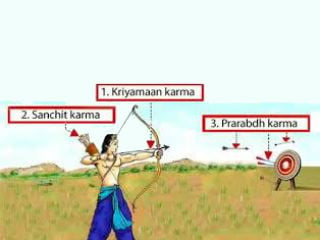 Importance of Kriyaman-karma in overcoming Prarabdha-karma
 How to overcome sufferings of Prarabdha
 Facing the consequences of Prarabdha
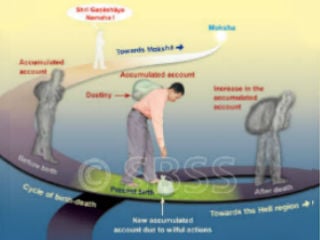 What is Sanchit-karma and Prarabdha?
 Kartavya (Duty) karma