

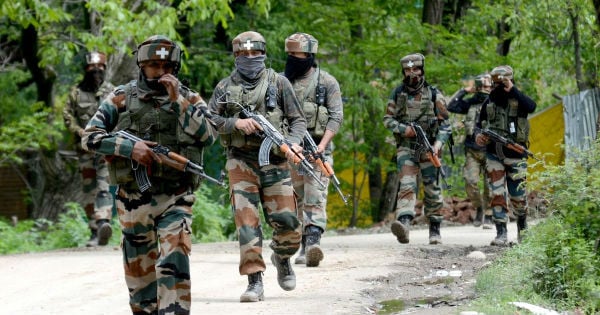
Tales of war are deceptive from afar
People often say that tales of war are alluring from afar (Yuddhasya katha ramya). However, when real conflict breaks out and drags on indefinitely, the romance vanishes, leaving behind immense pain.
Modern India has never experienced such a prolonged, total war. In ancient times, battles lasted from a single day to a few weeks. The historical phase where Hindus fought Muslim invaders for nearly 700 years stands as a unique, separate era.
Comparing Global and Indian conflict timelines
In contrast, global history reveals staggering timelines. The First World War lasted 4 years, while the Second World War dragged on for 6. The Vietnam War went on for 20 years, with China and Russia backing the North, and America supporting the South. Iran and Iraq fought for nearly 8 years, and Israel has faced a daily state of war for 70 years. In recent memory, the Russia-Ukraine war has crossed 2 years.
Compared to these global conflicts, India’s modern wars have been remarkably brief. The wars of 1948, 1962, 1965, 1971, and the 1999 Kargil War lasted only a few days or months. Because these conflicts ended quickly, their impact barely touched the wider public across the nation.
Consequently, the general public never experienced the true, scorching agony of total war. European countries, however, felt this devastation deeply during both World Wars.
The modern shift to nuclear realities
Today, any major conflict will not remain conventional; it carries a massive risk of turning into a nuclear exchange. Analysts reason that a modern war might last only a few days rather than months or years. We must remember that two atomic bombs halted World War II after 6 years of continuous fighting.
Even so, considering the possibility of war, a nation must prepare on all fronts by calculating how many days it might last. Only then can it successfully wage war.
In this scenario, the preparations of an aggressor nation differ fundamentally from a nation defending itself. A country initiating a war plans its moves methodically. Conversely, a nation facing an imposed war must maintain perennial battle-readiness, knowing that an attack could come at any moment.
The section below briefly outlines the various components involved in war preparations. This will help readers understand how nations prepare for war, how actual warfare unfolds, and what the role of ordinary citizens is and should be. To ground this scope, we will keep India’s traditional adversaries, Pakistan and China, in view.
War Preparations
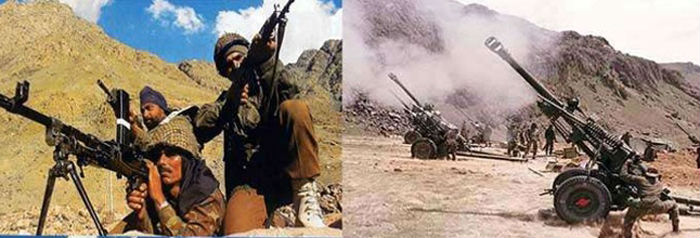
1. Peacetime planning and timing an attack
An attacking nation must calculate its timelines and define its targets during peacetime. Leaders must determine the exact military and financial resources required to achieve their goals.
If India decides to strike terrorist camps within Pakistan, planners must evaluate several vital factors. They must calculate the time needed to destroy hideouts, assess Pakistan’s retaliatory capacity, and anticipate foreign intervention.
Furthermore, India must secure its borders with China, handle global diplomatic pressure, and choose the ideal deployment season. This complex planning can take months or even years. In 1971, Prime Minister Indira Gandhi discussed military action with Field Marshal Manekshaw. He requested 6 months to fully prepare the armed forces. India waited, prepared thoroughly, and won a decisive victory.
Suppose a war needs to be sustained for a longer period, or it extends beyond the planned duration – planners must anticipate these requirements well in advance.
For instance, India must think along these lines if it dares to confront China, or if China joins the war on Pakistan’s side. Planners would have to make preparations by calculating exactly how long that multi-front war would drag on.
After Hitler seized power in Germany, he immediately began preparing for war to avenge the defeat of the First World War. He aimed to conquer Europe and initiated intensive military readiness over several years. As a result, he sustained a war for nearly 6 years, conquering several European nations and parts of Russia. He also brought France and England to their knees, only facing defeat in Russia due to the extreme winter. Otherwise, he would have ruled over Europe.
A. Defensive readiness against a probable strike
A country facing a constant threat must always remain in a state of absolute war readiness, keeping in mind that an aggressive neighbour could strike at any moment.
Since its creation in 1947, Israel has expanded its territory and protected its citizens by remaining perennially prepared for attacks from neighbouring nations and retaliating effectively.
B. The cost of neglecting pre-war preparations
Before China attacked India in 1962, defence experts and Swatantryaveer Savarkar had explicitly warned that an invasion was imminent. Once China usurped Tibet, an attack on India was fully expected. However, PM Nehru ignored these warnings and remained immersed in the utopian dream of ‘Hindi-Chini Bhai Bhai’ (Indians and Chinese are brothers). Consequently, India paid a heavy price, and China usurped 84,000 square kilometres of territory.
The stain of this defeat is a lasting blemish on India. Even today, a lingering fear of China exists somewhere in our minds. To prevent such catastrophes, threatened nations must remain perennially battle-ready.
C. Immediate mobilisation once war is decided
Once a nation decides to go to war, it must rapidly enhance its military capabilities. Planners must arrange weapon stockpiles, aircraft, warships, ammunition, and fuel to outmatch the enemy, alongside recruiting new soldiers. A nation caught off guard faces swift defeat. Therefore, if India intends to counter Pakistan or China effectively, it must build its military supplies completely from scratch.
D. Assessing the nation’s economic health
Waging war demands astronomical expenditure. A brief, localised conflict like the Kargil War does not drain a country’s total wealth. However, a major war requires massive financial reserves.
The government must evaluate its foreign exchange reserves, as international weapons and fuel purchases require US dollars, not Indian Rupees. India must ensure these reserves can sustain a prolonged conflict.
In 1991, India faced a critical shortage of foreign exchange reserves and had to mortgage its gold abroad. Though not a time of war, the economic crisis mirrored a wartime strain.
If reserves run dry, the economy risks collapse. When a war drags on, the defending nation usually suffers greater economic ruin than the attacker. During such crises, the government may appeal to citizens to donate their money and gold, requiring people to be mentally prepared to sacrifice their personal wealth for the nation.
2. Preparing the civilians
During times of peace, ordinary citizens rarely think about war. However, citizens in places like Israel treat every day as a potential battle and live in a constant state of readiness.
Israel enforces mandatory military training for both men and women, instilling patriotism from birth. This collective discipline allows Israel to stand proudly against hostile nations.
In India, Swatantryaveer Savarkar historically demanded conscription (compulsory military training) for all citizens. Later patriots repeated this call, but pacifist leaders rejected it.
Hindu Dharma places immense value on military training, even creating a specific Varna (social class) for defence. Yet, history shows that members of all classes have taken up arms whenever the Nation and Dharma faced danger. Despite this legacy, post-independence leaders have failed to build a battle-ready population.
A. Countering internal security threats
Total warfare can trigger internal rebellions, a danger that India must monitor closely. Recently, a Pakistani minister named Muhammad Ali warned on television that a conflict would ignite domestic forces. He claimed that if India attacks Pakistan, the 5 lakh Pakistani military will respond alongside 22 crore Pakistani citizens. Furthermore, he claimed that the 30 crore Muslims residing inside India will also rise up against the state to wage Ghazwa-e-Hind (a holy war waged by Muslims against the infidels [Hindus] in India).
Mainstream media deliberately suppressed this provocative statement. Indians must recognise this internal threat and remain highly vigilant. Citizens must actively assist the police and security forces to neutralise treason if internal revolts erupt.
B. Embracing austerity and civic sacrifice
Modern Indians have never been trained to endure wartime austerity. If a sudden conflict drags on, the public will face severe shortages that many will find unbearable.
Fuel will cause the most critical crisis. Because domestic production does not meet national demand, India imports the vast majority of its oil from other countries.
During an ongoing war, the state must redirect all available fuel to the military, triggering a massive civilian shortage. Citizens will have to restrict personal travel, abandon private vehicles, and rely strictly on public transport.
Fuel shortages will eventually cripple the transport of food grains. This disruption means that food items may disappear from markets entirely, leaving people hungry even if they have money to spend.
C. Imposing restrictions on power and water
Wartime conditions will force the administration to restrict water and electricity usage. Because city pumps rely heavily on fuel and power, water supplies will dwindle rapidly.
If coal transportation slows down, electricity generation will drop. If an enemy successfully targets and destroys dams, it will deal a catastrophic blow to the populations relying on them.
To mitigate this, communities must maintain local lakes and wells during peacetime. While rural villages can sustain this independent supply, modern mega-cities and “smart cities” cannot. Residents in cities dependent entirely on massive dams will have no choice but to evacuate if those systems fail. Additionally, enemy strikes on major power stations will plunge entire regions into darkness, mirroring the targeted destruction seen in World War II.
During active warfare, the administration enforces a blackout at night, making civilian lights strictly prohibited. The administration itself cuts off the night power supply for this purpose, preventing enemy aircraft from using city lights to locate targets.
Older generations who lived through past conflicts understand this protocol well. A blackout means all business and entertainment activities must cease after dark. If a war occurs during the peak of summer, the dual absence of water and electricity will cause immense public suffering.
D. Toughening the public’s mental resolve
Since independence, the public has not been taught about about civil defence. The current society assumes that only soldiers on the frontline need to make sacrifices.
Consequently, restrictions will be placed on electricity, water, and fuel during wartime, imposing tight curbs on daily life. Furthermore, entertainment venues like cinemas and theatres will shut down, causing severe psychological distress to those who rely heavily on these distractions.
Widespread business closures will also decimate personal incomes, forcing families to rely entirely on past savings. Those without financial reserves will face immediate ruin. If the crisis worsens, the government will likely cap bank withdrawals, making daily survival even harder.
Under these conditions, citizens cannot rely on state aid; they must unite to support their neighbours and care for the families of active-duty soldiers. This period will test national brotherhood.
One must contemplate how the people of Europe survived these situations during the First and Second World Wars. Along with maintaining a resilient mindset, one must be prepared to go hungry. Furthermore, the plight of sick people is likely to worsen as they face a shortage of medicines. At that time, they will have to try and remain in communion with God. However, since not everyone is a believer, the situation might turn them into believers.
3. Managing the state’s financial survival
If a country decides to wage war, it needs to make financial preparations alongside military readiness to ensure that financial constraints do not arise over a prolonged period.
First, foreign exchange reserves must be reviewed. While purchasing any material from abroad, payments must be made in US dollars, not in Indian rupees. At such times, it is essential for India to possess these foreign exchange reserves.
In the year 1991, because India did not possess these reserves to the expected extent, a massive amount of gold had to be mortgaged abroad. It should be noted that there was no wartime situation then, yet the economic condition had turned critical like a war.
Therefore, if these reserves are insufficient, severe restrictions will be placed on weapons procurement, fuel purchase, procurement of other materials, and trade, creating a strong likelihood of the economy collapsing. When a country is attacked and the war drags on, the victim of the attack suffers greater damage than the attacker. One reason behind this is economic, because the victim is not necessarily prepared for it.
At such times, the government may appeal to citizens to contribute money, gold, etc. The public will then have to do this for the country, requiring absolute mental preparation. One can counterfeit anything, but one cannot counterfeit money. There is also a possibility that the government might not allow people to withdraw their money from banks during this period.
4. Managing active frontline
Once active warfare commences, the scale of the entire country’s involvement depends on the nature of its borders and its geographical area compared to the enemy.
For instance, during the 1962 war with China, the conflict remained confined to the Himalayan border, leaving South India completely unaffected. In 1971, however, the conflict engulfed both the Eastern and Western borders, drawing in the Army, Navy, and Air Force on a massive scale.
At that time, the government enforced a blackout in Mumbai because the Indian Navy had launched a massive attack on Karachi port, raising the possibility of Pakistan targeting Mumbai in retaliation. Today, China is actively attempting to establish its base by infiltrating the Indian Ocean, creating a strong probability of an attack on India from the south.
A. Pivoting private industry to military production
Once active warfare begins and continues over a prolonged period, a shortage of weaponry may be felt. At such times, the government can initiate weapons and critical spare parts manufacturing through private factories alongside ordnance factories.
B. Securing emergency blood reserves
Once war begins, soldiers get wounded in large numbers, creating an urgent demand for blood. The government will issue widespread appeals for blood donation, and patriotic citizens must step forward to populate donation centres.
The state will reserve hospitals primarily for wounded soldiers, and the medical system will redirect pharmaceutical supplies to the military frontline on priority.
C. Mass recruitment drives
Appeals will also be issued for recruitment into the military. At such times, youth must give priority to this and join the armed forces. The state will give distinct preference to individuals who have already undergone relevant training.
5. Confronting the absolute danger of nuclear escalation
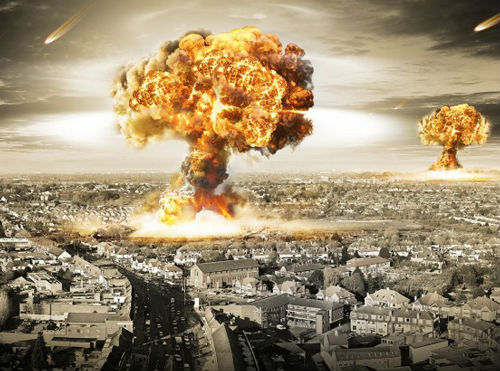
Any modern war between India and Pakistan will almost certainly escalate into a nuclear conflict. The government, the administration, political parties, and the general public must accept this reality and prepare for the consequences.
Although India recently modified its strict “No First Use” policy, its cultural mindset suggests it will likely not strike first. Therefore, Pakistan would likely initiate a nuclear strike.
Analysts project that Pakistan’s primary targets would include New Delhi, Chandigarh, Mumbai, Jaipur, Agra, and Meerut. Because Pakistan holds a slightly larger nuclear stockpile, India would respond with overwhelming force, erasing Pakistan’s major urban centres, including Islamabad, Karachi, Lahore, Rawalpindi, Hyderabad, Sialkot, and Peshawar, from the map.
– Shri. Prashant Koyande, Sanatan Ashram, Ramnathi, Goa.
Atomic Bomb capabilities of India and Pakistan
Currently, the highest-capacity atomic bomb possessed by Pakistan has a capability of 45 kilotons, which can vaporise an area of 0.25km. Due to a ground explosion, the adverse effects of radiation can spread across an area of 1.16 kilometres. If this bomb detonates in the air, its impact will affect an area within a 2.5-kilometre radius, causing severe injuries to civilians within a 3.05-kilometre radius.
If India drops its 60-kiloton capacity atomic bomb on major cities in Pakistan, it will vaporise an area of 0.3km and spread radiation across 1.16 kilometres. If this explosion occurs in the air, it will completely devastate a 2.75-kilometre region and cause severe injuries to anyone within a 3.48-kilometre radius. As of 2026, Pakistan possess 170 atomic bombs, while India is estimated to have 190.
Preparations to be made considering the danger of Nuclear War
If a nuclear war takes place, it will cause large-scale loss of life and result in lethal radioactive fallout. Consequently, any immediate rescue attempt by untrained teams would quickly cause the death of the rescuers themselves.
The government must establish specialised training and response mechanisms during peacetime regarding the nature of rescue operations to be conducted. The state needs to study this, provide detailed information to the public, and create widespread awareness.
Agnihotra: An effective remedy to mitigate the impact of radiation

Agnihotra (a consecrated fire ritual) offers a subtle defence against the invisible threat of nuclear radiation. Compared to a conventional bomb, an atomic bomb operates at a subtler level. Because the subtle is always more potent than the gross, our counter-measures must also employ subtle energies.
The simple, time-efficient practice of Agnihotra purifies the local atmosphere with Divine Consciousness (Chaitanya) and forms a spiritual protective shield. Through this practice, the devastating impact of radioactive fallout can be mitigated.
(Click here to learn the ritual and start your Agnihotra practice.)
 The wartime survival guide: A citizen’s manual for civil defence
 Terrace gardening a lifeline for calamitous times (Part 2)
 Terrace gardening a lifeline for calamitous times (Part 1)
 Activities to be undertaken daily to maintain God’s grace and to build a protective shield...
 how to improve mental strength to face a terrible situation such as a riot
 Preparation required to survive during the adverse times Part – 10